
Share This Article
One wrong step, a sudden change in the weather or overestimating your abilities is all it takes for a carefree hike to turn into a rescue operation. Mountain rescuer Jakub Filipko from the Low Tatras explains why, in an emergency, the most important things are not to wait, to describe your location as accurately as possible and to follow the operator’s instructions.
Staying safe in the mountains is not just about having good-quality equipment. It is equally important to know when to turn back, who to call and how to help an injured person until the rescuers arrive.
If someone is injured, do not wait to see whether their condition improves
If your companion is injured, your first step should be to call for help as quickly as possible.
“Rescuers may not be able to reach you within just a few minutes in mountain terrain. Depending on the weather, your location and the difficulty of the terrain, it can take several hours,” warns Jakub Filipko.
In mountain areas in Slovakia, call the Mountain Rescue Service on 18 300. You can also use the universal emergency number 112. Based on your location, the Mountain Rescue Service app automatically identifies which emergency line to contact and sends the available information about your position together with the emergency message.
Contact the rescuers even if you are unsure how serious the injury is. The operator will assess whether immediate intervention is required or help you manage the situation over the phone.
Switch your phone to speaker mode. This allows you to stay in contact with the operator while monitoring the injured person at the same time.
The most important information? Your location
During an emergency call, the operator will ask about the injury, consciousness, breathing, bleeding and the number of people in your group. But the first thing they need to know is where you are.
“The signal may drop during the call. If we know how serious the injury is but do not know where to find the person, we cannot send help to them,” explains the mountain rescuer.
Give the following information as accurately as possible:
- GPS coordinates or your location from a map app,
- the name of the hiking trail and the direction you were travelling in,
- the last signpost, mountain hut, cable car or another distinctive location you passed,
- your approximate altitude, if you know it,
- the number of injured people and the total number of people in the group.
The operator may also ask about the injured person’s age or approximate weight. This information helps rescuers decide how many people and what type of transport equipment they will need.
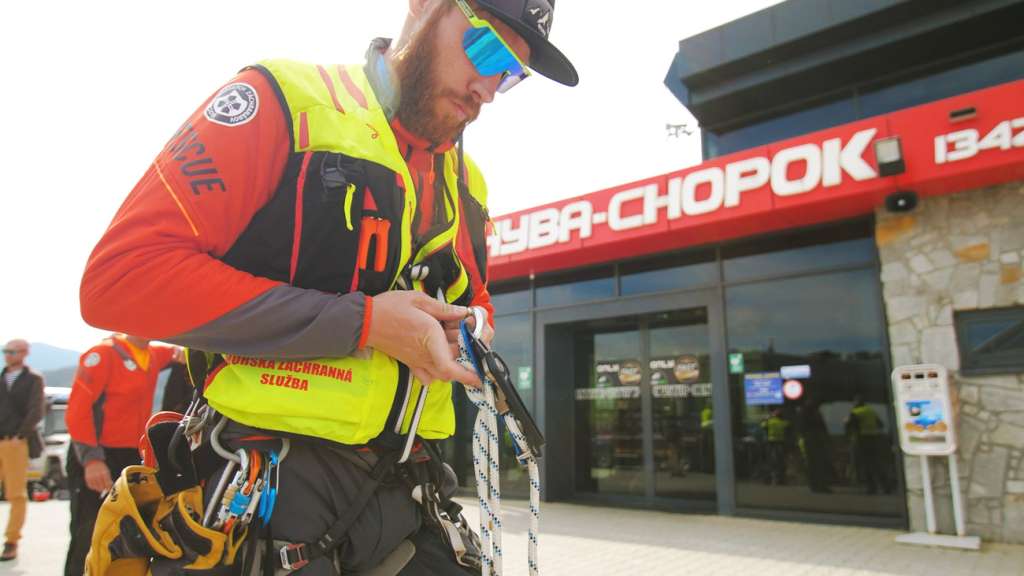
How to check and stabilise an injured person
First, make sure that helping the injured person does not put you in further danger. Watch out for falling rocks, unstable slopes, mountain vehicles, water or an approaching storm.
Next, check whether the injured person is responsive and breathing normally. Look for severe bleeding as well. In a life-threatening situation, call for help immediately and follow the operator’s instructions. Current European first-aid recommendations emphasise making sure the scene is safe, contacting the emergency services quickly, checking consciousness and breathing, and stopping life-threatening bleeding.
After a serious fall, avoid moving the injured person unnecessarily. The exception is an immediate danger such as falling rocks, water or another hazard. The operator can guide you on how to position the injured person, stop bleeding and take any further steps. Medical rescue professionals are available at the operations centre to provide support.
At the same time, protect the injured person from cold, wind and rain. Even in summer, someone lying still can become chilled very quickly.
Set up the Mountain Rescue Service app before you leave home
The Mountain Rescue Service app is not only designed for calling for help. Using GPS, it can send your location, display current warnings and show the nearest Mountain Rescue Service stations, mountain huts, weather stations and automated external defibrillators.
You can save medical information, emergency contacts and other details that may be important for rescuers in your profile in advance. During an emergency call, this information is sent directly to the dispatch centre. If the mobile data signal is weak, the app can generate an SMS message, which requires a less reliable connection than a phone call. In 2026, Mountain Rescue Service also expanded its emergency communication options to include SMS chat on 18 300.
So simply downloading the app on the way to your hike is not enough. Verify your phone number, complete your profile and familiarise yourself with its functions beforehand.
The best rescue operation is the one that can be avoided
Preparing for a hike does not begin with packing your rucksack. It begins with choosing the right route.
Take into account the fitness, experience and health of everyone in the group. If you are hiking with children, adapt the route to the weakest member of the group, not the fastest adult. Decide in advance on a time when you will turn back, regardless of how close the destination may seem.
Before setting off, check:
- the latest weather forecast and mountain warnings,
- trail conditions and any closures,
- the length of the route and total ascent,
- the time of the last cable car, if it is part of your plan,
- options for shortening or ending the hike early.
The Mountain Rescue Service publishes current conditions, warnings and notifications about changes to hiking trails for individual mountain regions.
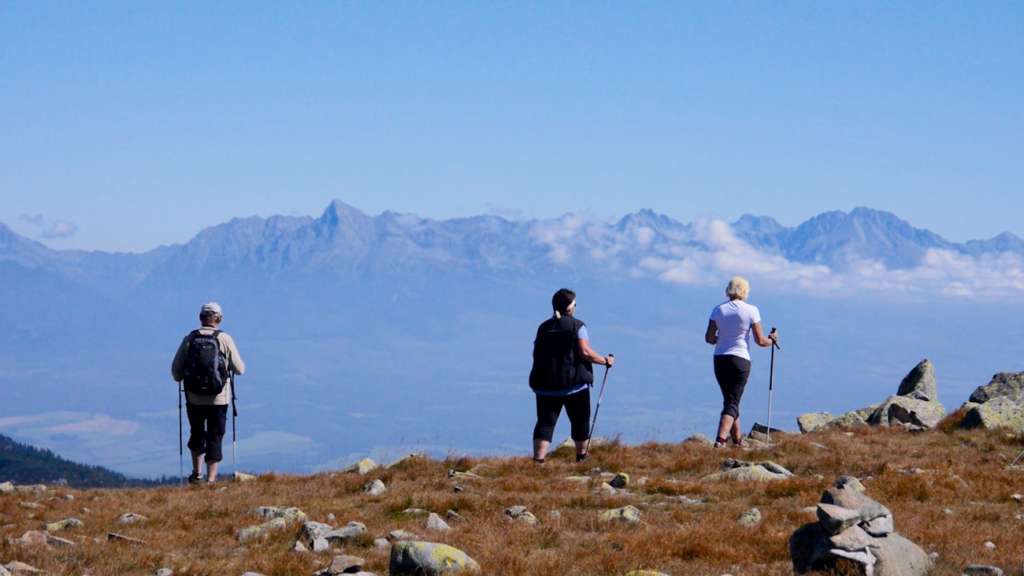
What should be in your hiking rucksack
Adjust the contents of your rucksack to the length of the route, the season and the forecast. Sturdy hiking boots with suitable soles are essential. Saving money on footwear, especially for children, may prove costly – tired feet and poor stability increase the risk of slipping or injuring an ankle.
For a standard mountain hike, make sure you pack:
- enough water and energy-rich snacks,
- a waterproof and windproof jacket,
- a warm layer and something dry to change into,
- a first-aid kit and any personal medication,
- an emergency thermal blanket,
- a head torch or another independent light source,
- a fully charged phone and a power bank,
- headwear and sun protection,
- a map, ideally one that is also available offline.
Your first-aid kit should reflect the environment and the risks associated with the activity. Before each season, check its contents, the expiry dates of medical supplies and replace anything you have used.

When hiking with children, plan regular breaks. Children may seem full of energy, but their performance can drop very quickly. A short rest, some water and a small snack can prevent ordinary tiredness from turning into a problem.
Lost your bearings? Do not head off in a random direction
If you do not know where you are, stop. Continuing without knowing the correct direction can take you into steep terrain, dwarf mountain pine or even further away from a marked trail.
Open your map, try to identify the last place you recognised with certainty and contact The Mountain Rescue Service. If the operator is able to locate you and there is a safe way back, they may be able to guide you to the trail over the phone.
If it is not safe to continue moving or if you are injured, stay at the agreed location. Ideally, remain by a signpost, trail marker or another easily recognisable point. If you continue moving after reporting your location without informing the rescuers, you can make the search significantly more difficult.
Protect yourself from the wind and cold, conserve your phone battery and maintain contact. Keep one phone available for communication with the rescuers.
A storm on the ridge: getting down early is key
A summer hike should start early in the morning. Local afternoon storms can develop very quickly, and on an exposed ridge there may be nowhere to shelter.
If the sky darkens significantly, you hear thunder or see lightning, do not wait to see whether the storm will pass you by. Leave the summit, ridge and other exposed places as quickly as possible. Do not stay near an isolated tree, pole, body of water or beneath a rock overhang.
The most important thing is not to remain in an exposed location and to reach safe shelter as quickly as possible.
How to behave when a helicopter arrives
If the operator tells you that a helicopter is on its way, choose one person to signal to the crew. They should stand somewhere clearly visible, slightly away from the rest of the group, and wear the brightest item of clothing available.
The whole group should not start waving. From the pilot’s perspective, it may then be unclear which group contains the injured person.
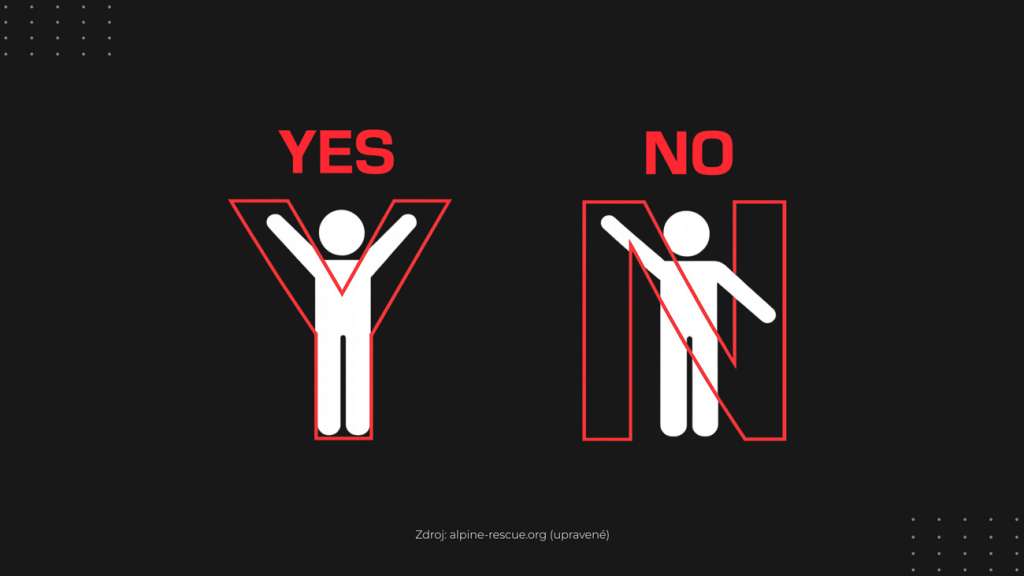
Simple signals are used:
- both arms raised above your head in the shape of a V mean “yes, we need help”,
- one arm raised and the other lowered, creating a shape similar to an N, means “no, we do not need help”.
Secure loose objects, put away walking poles and make sure clothing, blankets or hats cannot be blown away by the rotor wash. Do not approach the helicopter until the crew clearly instructs you to do so.
If the helicopter first circles the area and then flies away again, it does not mean the crew has failed to find you. The pilot needs to assess the terrain, the wind and the options for landing or lowering a rescuer using a winch.
Do not ignore feeling unwell after taking a cable car
A rapid cable car journey from a valley to an altitude of around 2,000 metres can cause weakness, dizziness or nausea in more sensitive visitors. However, these symptoms should not automatically be described as acute altitude sickness.
The affected person should stop the activity and rest. If they can move safely and their symptoms are mild, descending to a lower altitude may help. If the symptoms worsen, or if the person collapses, becomes confused, experiences chest pain or has difficulty breathing, contact the rescue services immediately. If altitude-related problems are suspected, do not continue higher, and if the condition deteriorates, descend.
A safe return is part of every mountain adventure
Respecting the mountains does not mean being afraid of them. It means being able to adapt your plans to the weather, terrain, your own fitness and the people travelling with you.
Sometimes the best decision is to skip the summit, shorten the route or turn back earlier. The mountains will still be there tomorrow. What matters most is that you return safely – together and ready to head out again next time.
Remember
18 300 is the emergency number for the Mountain Rescue Service in mountain areas in Slovakia. You can also call the universal emergency number 112. When reporting an accident, give your location first, do not move from the spot without agreeing it with the rescuers, and follow the operator’s instructions throughout the rescue operation. Prepare the Mountain Rescue Service app, your map and all necessary equipment before you set foot on the trail.
This content was created or edited using artificial intelligence (AI).