

Share This Article
Fewer steps, faster shopping and everything that matters conveniently in one place. This was precisely the ambition behind the new Gopass, which we designed from the ground up around customers’ needs and how they actually use the platform. The result is a more modern platform that brings purchases of different services together and delivers a consistent experience on mobile and the web. Its biggest change, however, remains behind the scenes, where a new technological architecture will allow us to respond more flexibly to new ideas and needs.”
Matúš Kráľ – Head of IT
Read about how the new Gopass took shape, the challenges we faced during its development and everything it will make possible in the years ahead.
1. When did you first realise that adapting the original solution and “bolting on” more features was no longer enough?
What was the biggest obstacle in the old system, both for development and for customers?
It did not happen overnight; it was something we gradually came to acknowledge. Gopass was created more than ten years ago primarily as a loyalty programme and a platform for selling ski passes — and since then, we have gradually added water parks, hotels, dining, summer attractions and more resorts across several countries. Every new feature could be added, but doing so was more expensive and slower than adding the previous one. When we realised that implementing a relatively simple new feature was taking months rather than weeks, the decision was made.
The purchasing process also reflected the system’s history — there were too many steps to complete, different product types followed different purchasing logic, and the mobile app had limited functionality.
2. How long did the team work on the new Gopass, and how many people were involved in the project?
Around two years, including the preparation phase. Roughly thirty people were involved — developers, designers, testers, the product team and people working directly at the resorts who know the operations and customers first-hand. That combination was important: the new Gopass was developed not just within the IT and Gopass departments, but in close collaboration with operations and other departments.
3. What was the most technically demanding part?
The biggest challenge was not building a new system, but building it while the old one remained fully operational. Gopass has hundreds of thousands of active users and runs 365 days a year — we could not afford to “close the shop for refurbishment”. The new system was therefore developed in parallel and, from day one, had to be designed to take over the entire history, all accounts and all current seasonal products. We had to design a new architecture that could bring everything important together while remaining flexible for the future.
4. How did you take real users’ behaviour into account when designing the platform?
Did you carry out testing with visitors?
Data was our starting point — millions of people use Gopass, so we can see exactly where customers hesitate during the purchasing process, where they leave and what slows them down. We based the design of the new system on this real data, rather than impressions.
5. What will be the main difference an everyday visitor notices when the new Gopass launches?
How quick and easy it is to buy. An everyday customer is not buying a system; they are buying a skiing experience or a day at a water park — and that is exactly how we approached the design. Fewer steps, a clearer selection and everything just a few clicks away on mobile and the web. The new Gopass also works consistently: whether you are buying a ski pass, water park admission or a hotel stay, the process looks and works the same.
6. Is there, on the other hand, a part of the system that an everyday user will never see, but which you consider the most important?
Yes — the new architecture itself. The old Gopass was one large, interconnected system; the new one is built from smaller, independent services, known as microservices, connected via APIs and running in the cloud. Customers cannot see this, but it means three crucial things: the system can handle demand on peak days — such as the first snowfall or the launch of season pass advance sales — without slowing down; we can deploy a new feature without putting the rest of the system at risk; and when maintenance is needed, it affects only a smaller component rather than the whole of Gopass.
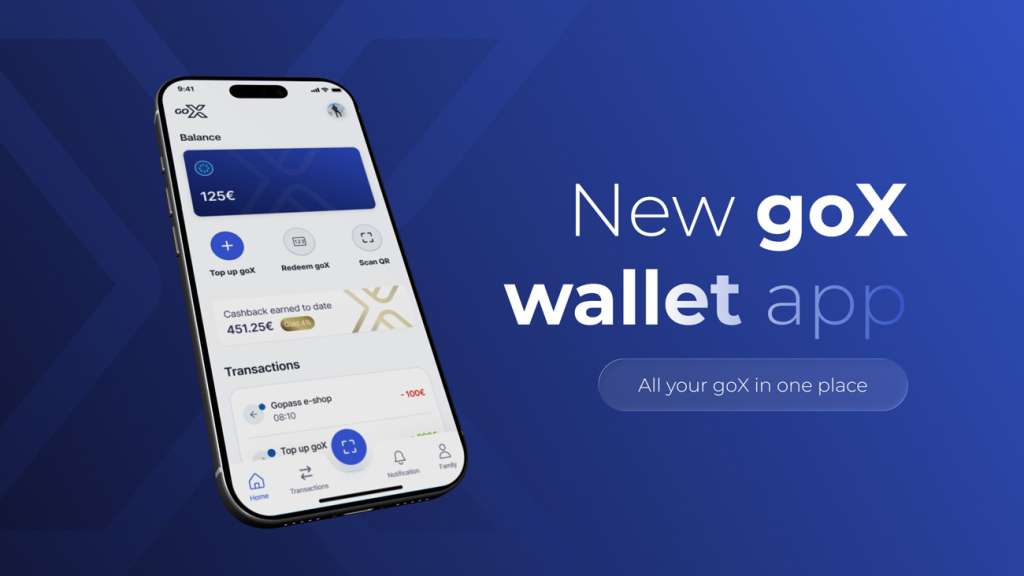
7. What other features had customers been requesting for a long time that you have now been able to deliver?
There are several, and in this respect we have taken a really significant step towards improving customer satisfaction.
- A single account and one shopping basket for all resorts and services (ski pass + water park + hotel in one purchase).
- Better family/group management — purchasing for several people without switching accounts.
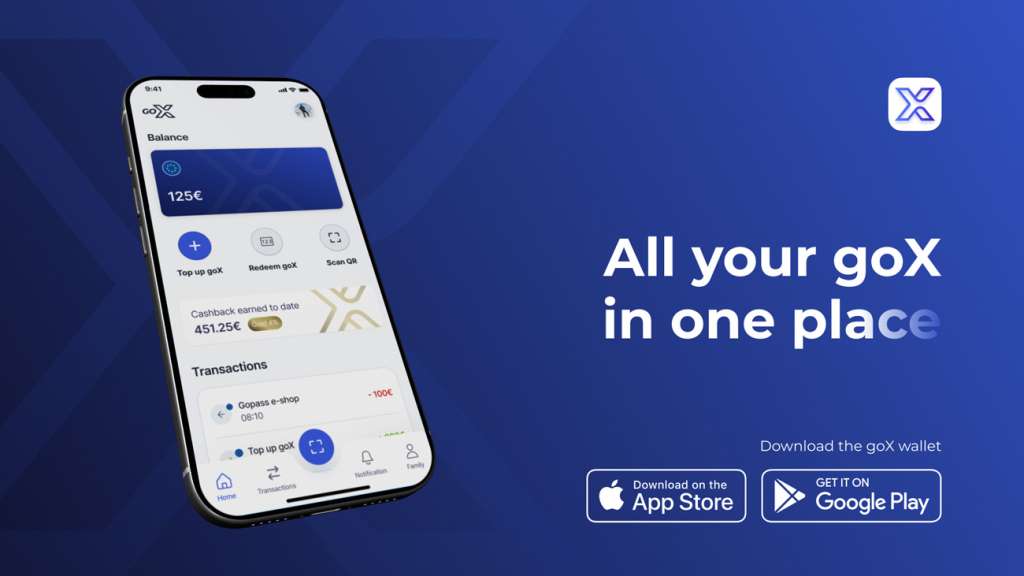
- A fully featured mobile app, including a ski pass on your phone.
- A clearer overview of how to use goX and loyalty programme benefits.
- Earning goX cashback in real time.
8. How have you simplified the entire purchasing process compared with the current experience?
How many steps or how much time can the new Gopass save customers?

To put it simply — the customer comes first. The most important thing is that we have completely reworked and rebuilt the purchasing process from the customer’s perspective, rather than the system’s.
We have unified the logic across products, removed steps that the old system required, and made repeat purchases — a very common scenario for seasonal customers — a matter of just a few clicks, because the system remembers people, cards and preferences. The new website was developed using a “mobile-first” approach, meaning we worked on the mobile phone version first and only then on versions for larger computer screens.
9. You say the new system is much more flexible. What does that mean in practice?
What new services or products will the new architecture allow you to add in the future?
In practice, it means that adding a new product, resort or even an entire type of service is no longer a development project lasting months, but a configuration task taking days or weeks. The new Gopass is built using an “API-first” approach — the system’s core is separate from what the customer sees. This allows us to sell the same product through the website, mobile app, a ticket office at a resort or a partner, without having to programme anything again.
Looking ahead, this creates opportunities for dynamic service packages, more flexible pricing, new types of admission and products, and the rapid integration of new resorts and partners into the Gopass ecosystem.
10. What modern technologies or principles did you use during development?
Did you work with AI, for example?
The new Gopass is built on three principles: a microservices architecture instead of a monolithic system; cloud infrastructure using the Kubernetes platform, which scales automatically according to demand; and a headless approach — a clear separation between the system’s core and the user interfaces, connected via APIs.
We primarily used AI during development itself. AI tools helped us with writing and reviewing code, testing and documentation — and made the team’s work faster in practice. This is one of the reasons why around thirty people were able to deliver a project of this scale. At the same time, the new architecture opens the door to customer-facing AI in the future — for example, to personalise the offers customers see.
11. How did you address the security of user data and payments?
Security was part of the design from day one, rather than an additional layer added afterwards. Payments are processed by certified payment partners in accordance with the PCI DSS standard — card numbers are not stored in our system in a readable form. We process personal data in accordance with the GDPR, and the new architecture has, perhaps surprisingly, helped us here: when a system is divided into smaller services, each one accesses only the data it strictly needs.
In September, before being deployed to production, the system also underwent repeated internal security audits and external audits conducted by a certified company. This process will continue on an ongoing basis in the future to identify vulnerabilities effectively.
12. How will the transition work for existing users?
Will people need to create a new account, or will their data be transferred automatically?
This was an absolute priority for us: existing users do not need to do anything at all. All accounts, purchase history, goX and purchased products will be transferred to the new system automatically. Customers will simply log in and find everything they had before — just in a faster, clearer environment.
13. What do you think the new Gopass will make possible in five years that would have been practically impossible on the original platform?
The new Gopass is designed to grow with us. I can imagine a Gopass that acts as a true digital holiday guide: it knows your preferences, puts together a personalised selection of skiing, wellness, dining and accommodation across all resorts and countries, and lets you arrange your entire stay with a single purchase on your phone.
Equally important is what we cannot yet imagine today.
The new platform’s greatest value is not a specific feature, but the fact that when a new technology or idea comes along, we can respond in weeks rather than years. That was practically impossible with the old system — and that is exactly why we rebuilt it.